


Ecology
Using electricity and water, waste is dried and carbonized without incineration. Organic matter is thermally decomposed using superheated steam at atmospheric pressure, resulting in a significant reduction in weight and volume.
Do you face any of these challenges?
- Waste disposal and transportation costs are rising
- We want to treat waste without relying on incineration and minimize the emission of CO2 and dioxins.
- We want to dry and reduce the volume of sludge and food waste with high moisture content.
- We want to utilize waste plastics, waste tires, bamboo, and wood as resources.
What Is Drying and Carbonization Using Atmospheric-Pressure Superheated Steam?
When saturated steam—produced by heating water to approximately 100°C—is heated further, it becomes colorless and transparent “atmospheric superheated steam.” Since water expands to approximately 1,600 times its original volume when it turns into steam, the oxygen concentration in superheated steam is 0.1–0.21 TP3T, making it virtually oxygen-free.
Because organic matter is heated in this oxygen-free environment, combustion does not occur, and harmful gases such as CO₂ and dioxins are generally not produced (though this varies depending on the type and amount of material being treated). The organic matter undergoes thermal decomposition, leaving behind a carbonized residue with reduced weight and volume.
Since superheated steam absorbs thermal energy rapidly and achieves high thermal efficiency when used in combination with far-infrared rays, even sludge with a high moisture content (approximately 80%) can be carbonized in about 90 to 120 minutes. This core technology (thermal decomposition treatment using atmospheric-pressure superheated steam) is protected by a basic patent.
Process Flow
The crushed and weighed feedstock is fed from the hopper into the pyrolysis chamber. The recommended feed rate is approximately 30 to 50% of the chamber's volume.
The steam from the electric boiler is further heated to produce superheated steam, which is then discharged into the chamber. Drying, pyrolysis, and carbonization proceed while the material is stirred; one cycle typically lasts about 60 to 90 minutes.
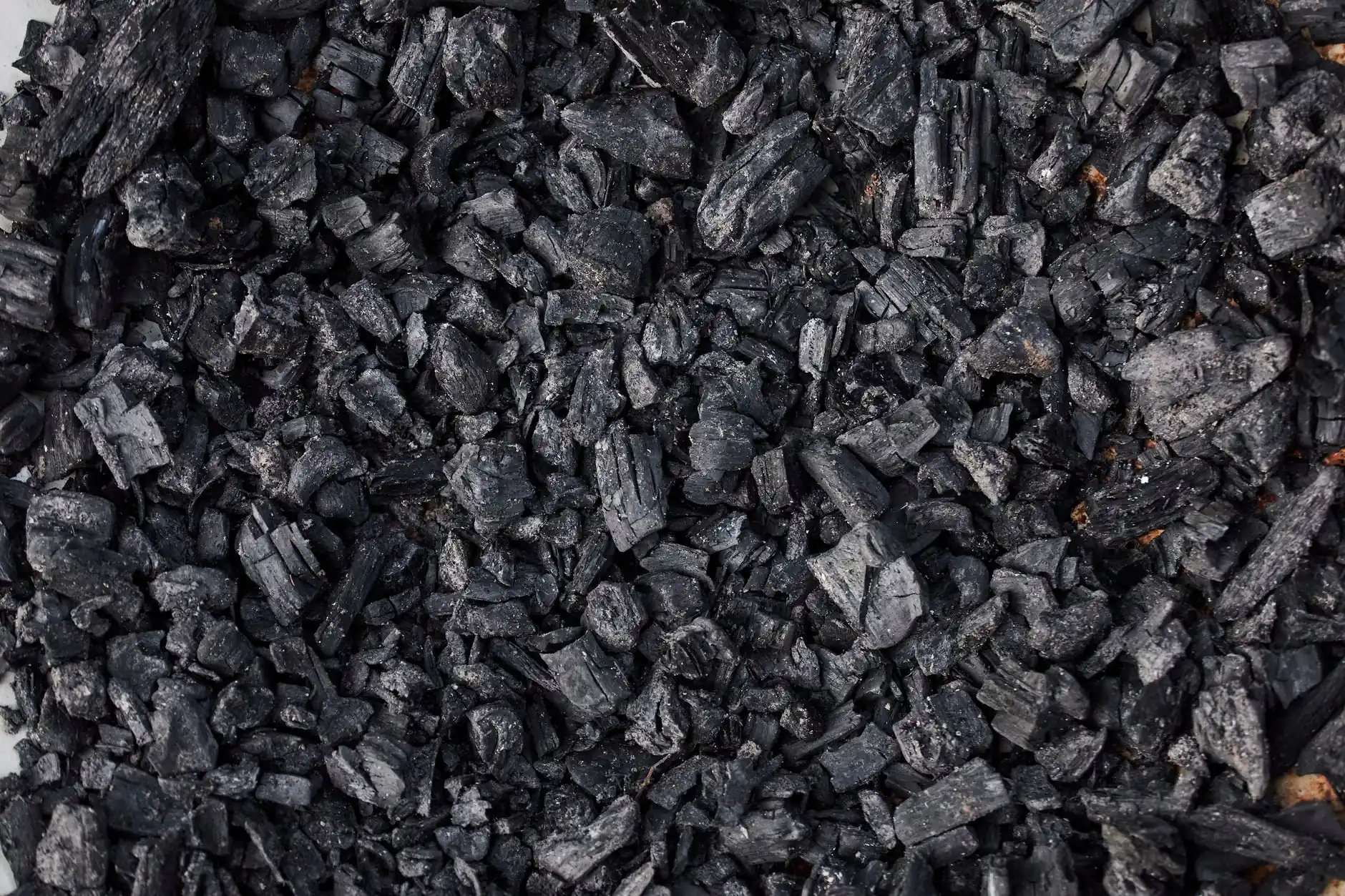
After processing, a fine, powdery carbide residue remains. Once cooled, it can be removed and reused as a soil conditioner or fuel.
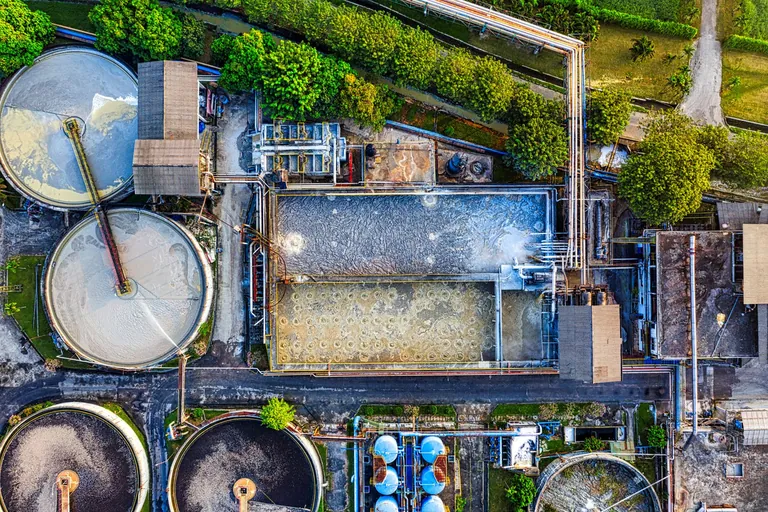
The dry distillation gas produced is condensed and liquefied in a heat exchanger, then separated into oil and wastewater. The oil is refined and reused, and the wastewater is discharged after meeting discharge standards.
Features
It runs on commercial electricity and tap water and does not use fossil fuels. It contributes to decarbonization and electrification.
Since pyrolysis is carried out using superheated steam in an oxygen-free environment within an atmospheric-pressure pyrolysis reactor, it is safe to operate.
Since there is no combustion, harmful gases such as CO2 and dioxins are generally not produced.
Materials with a high carbon content can be reduced in weight and volume to 1/10 to 1/30 of their original size, while materials derived from fossil fuels, such as waste plastics, can be reduced to 1/100 to 1/200 of their original size.
Due to its high thermal efficiency and short processing time, estimated operating costs range from 4 to 10 yen per kilogram (depending on the physical properties and moisture content of the material being processed).
The unit has a simple design that makes it easy to maintain, and it operates automatically once the temperature and time are entered via the touch panel menu.
Processing Examples and Equipment Specifications
99.9%
Weight Loss Rate (Carbonization Experiment on Disposable Diapers)
Approximately 60 to 90分
Estimated processing time per cycle
4–10yen/kg
Estimated Operating Costs (Varies Depending on the Material Being Processed)
| Materials to Be Processed | Results and Content |
|---|---|
| Disposable diapers | After carbonization, 5,600 g was reduced to approximately 50 g (weight loss rate: approximately 99.91 TP3T) |
| Dehydrated cake (plating sludge) | After 30 minutes of processing, the organic matter is almost completely pyrolyzed, and after approximately 90 minutes, it is almost completely carbonized. Powdery sand and dust remain, along with valuable materials such as gold, silver, and copper. |
| Used Tires | Thermal decomposition was performed to extract crude oil, and combustion tests on the crude oil were also conducted. The residue consisted of carbonized material and steel (reference values: oil content approx. 60–70%, residue approx. 10%). |
| Insulated Wire, Enameled Wire, and Waste Plastic | Carbonization experiments were conducted (with a processing time of 60 minutes for waste electrical wires). The weight and volume reduction rates for materials derived from fossil fuels, such as waste plastics, ranged from 1/100 to 1/200. |
| Medical waste (such as dialysis filters) | Carbonylation experiment conducted (processing time: 60 minutes) |
| Food scraps, coffee grounds, soybean pulp, discarded cheese, chicken meat | Comparative experiments were conducted before and after carbonization. The weight and volume reduction rates for materials with high carbon content ranged from 1/10 to 1/30. |
| Livestock manure, wood chips, bamboo | Drying and carbonization are possible (bamboo and wood can also be used to extract bamboo vinegar and wood vinegar) |
Main applications
- Drying and Carbonization of Dehydrated Sludge, Food Sludge, Food Waste, and Defective Food Products
- Drying and Carbonization of Animal Manure and Urine
- Drying and Carbonization of Bamboo and Wood (Extraction of Bamboo Vinegar and Wood Vinegar Also Possible)
- Thermal Decomposition and Oil Production from Waste Plastic and Waste Tires
- Carbonization of Electrical Wires, Medical Waste, and Long-Term Care Waste (such as disposable diapers)
Guidelines for Equipment Specifications
| (data) item | Small-Batch Type (for Prototyping and Small-Scale Production) | Large-scale (such as continuous-type) |
|---|---|---|
| Treatment Tank Volume | 160 L | Varies by model (approx. 1.5–5 m³) |
| Processing Capacity | Prototypes can be produced up to 10 kg | Approximately 2 to 3 metric tons per day (based on 10 to 11 hours of operation per day) |
| 1 cycle | About 60 to 90 minutes | Approximately 40 to 120 minutes (depending on the material being processed) |
| Superheated Steam Temperature | Approximately 120–800°C | Same as above |
| Power Supply and Power Consumption | Three-phase 200 V, 50/60 Hz; maximum approx. 30 kW | Three-phase 200 V, 50/60 Hz; maximum approx. 70–80 kW |
| Water Supply | Direct connection to the municipal water supply | Direct connection to the municipal water supply |
| Main Materials | SUS304 | SUS304 |
| External Dimensions (Approximate) | W 1,450 × D 1,100 × H 1,500 mm | Varies by model (e.g., W 5,000–7,000 × D 2,000–2,200 mm) |
The figures listed are reference values based on documentation and experimental results. Results may vary depending on the type, quantity, and moisture content of the material being processed, as well as operating conditions. Since legal requirements regarding installation (such as the Waste Management and Public Cleansing Act, the Air Pollution Control Act, and the Fire Service Act) vary depending on the installation site and the material being processed, please consult with us on a case-by-case basis.
The effects and figures listed here are for reference only, based on documentation, tests, and case studies, and do not constitute a guarantee of performance. Actual results may vary depending on usage conditions and the environment.
Frequently Asked Questions
What kinds of items can you process?
This equipment is primarily used for the drying, carbonization, and pyrolysis of organic materials such as sludge, food waste, livestock manure, bamboo and wood, electrical wires, waste plastics, scrap tires, and medical and nursing care waste. Since operating conditions vary depending on the type, quantity, and moisture content of the material to be processed, please contact us for more information.
If it isn't burned, how can it be processed?
Since the environment inside the atmospheric-pressure superheated steam is virtually oxygen-free, organic matter undergoes thermal decomposition (dry distillation) without combustion. Superheated steam transfers heat rapidly, and when used in combination with far-infrared radiation, it offers high thermal efficiency, allowing even materials with high moisture content to be dried and carbonized in a short amount of time.
What happens to the wastewater and distillation gases?
The distillation gas is condensed and liquefied in a heat exchanger, then separated into oil and wastewater in a grease trap. The oil can be refined and reused, and the wastewater is discharged after meeting local discharge standards. For materials that produce gases that are difficult to liquefy, a catalytic box can be added as an option.
What do you need to drive?
Electricity (three-phase 200 V) and tap water. No fossil fuels are used. You can choose the feed mechanism for the material to be processed (conveyor-type, lift-type, sludge pump-type, etc.) based on your specifications.
Related Pages
Inquiries and Consultations Regarding Processing
Please let us know the type, quantity, and moisture content of the material to be processed. We will provide you with detailed information about our equipment and are available to discuss installation options.