



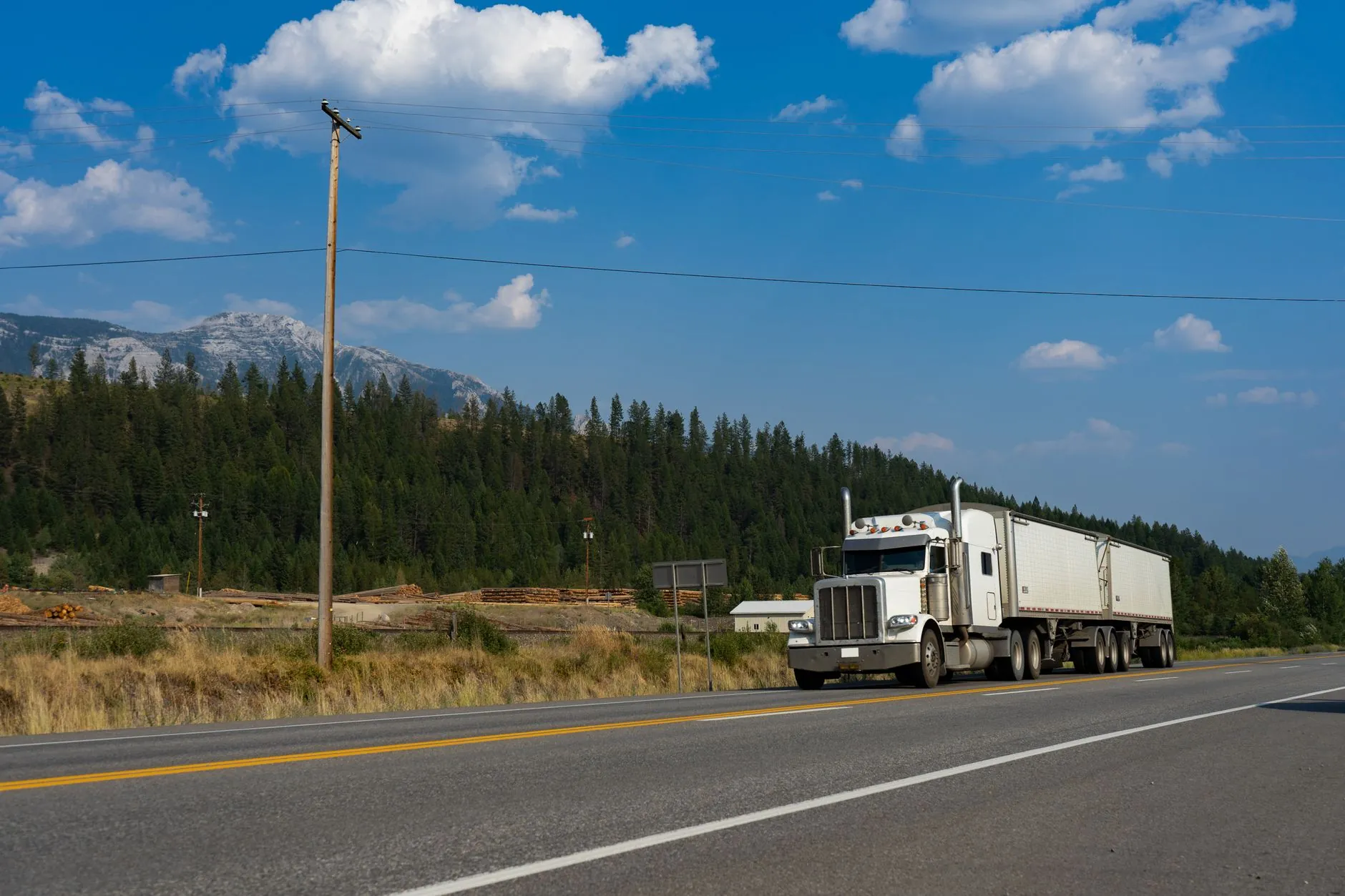
GRAPA-PSG | High-Performance Graphene-Based Lubricant Additive
Oil changes: from every 20,000 km to every 80,000 km.
"Grapa PSG," a lubricant additive that reduces truck operating costs. You can simulate your potential cost savings for free.
Reducing Truck Operating Costs
This proposal is intended for trucking and logistics companies.
Up to 4–5倍
Oil Change Interval (20,000 km → 80,000 km)
70–80%
Reduction of Friction and Wear (In-House Results and Third-Party Testing)
3–4%
Improvement in Average Truck Fuel Economy (Based on Our Company's Actual Data)
*To extend the oil change interval, it is essential to check the oil level regularly and “top off” the oil as needed. The oil filter replacement interval remains the same as before: every 20,000 km.
Do you have any of these concerns?
- The costs of oil changes and maintenance are mounting, putting pressure on profits.
- Operating costs are rising year after year due to soaring fuel prices.
- We want to reduce vehicle downtime for maintenance.
- We want to reduce the burden on drivers and maintenance staff in light of the "2024 Problem."
- I want to get the benefits of implementation approved through the internal approval process using substantiated numerical data.
What is “Grapa PSG”?
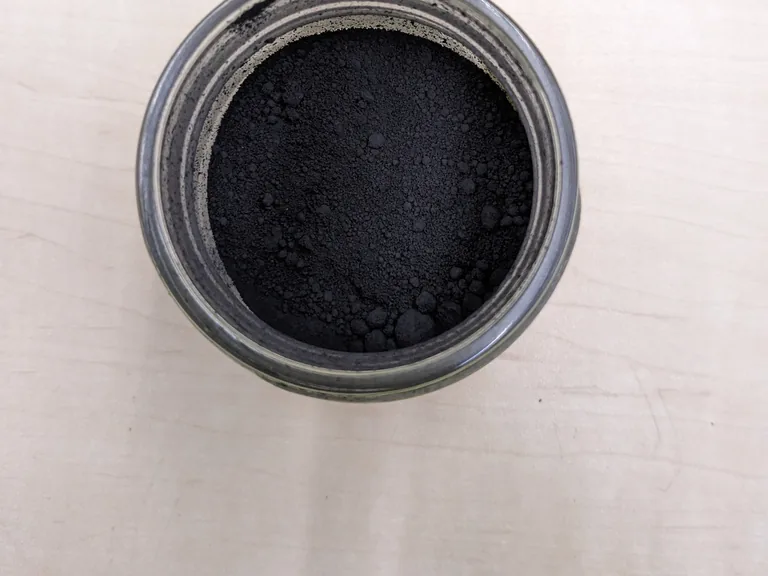
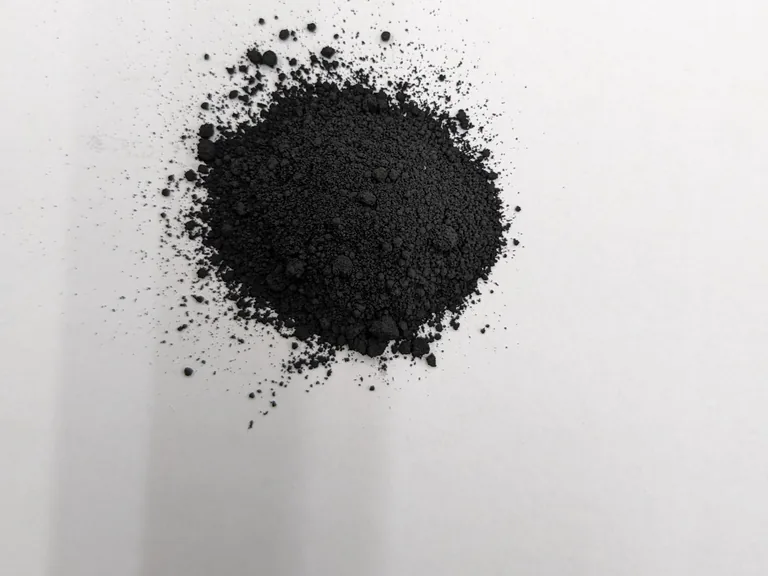
This is a high-performance extreme-pressure lubricant additive developed using Japan’s proprietary Carbon Terahertz (CTHz) technology, which combines graphite (carbon) with a purity of 99.0% or higher with terahertz frequencies. Ultra-thin graphene layers, measuring 0.2 to 0.3 nm in thickness, adhere closely to sliding surfaces such as pistons and bearings, forming a protective film that reduces friction and wear.
The particle size is extremely fine, ranging from 1.8 to 2.2 mesh, allowing it to pass through a 30-mesh oil filter without causing clogging. The sulfuric ash content is controlled to 1 TP3T per unit mass, which helps prevent DPF clogging. Since it is suitable for both gasoline and diesel engines, it simplifies maintenance by allowing the use of a single type of oil.
8 Expected Benefits
It reduces friction and wear inside the engine by 70 to 80%.
It extends the replacement interval by up to 4 to 5 times (from 20,000 km to 80,000 km).
Fuel economy improvements averaging 3 to 41 TP3T have been confirmed for trucks.
Reduces the amount of particulate matter in exhaust gases and smoke.
It improves acid neutralization and helps keep the engine clean.
Noise levels improve soon after the injection.
We aim to improve output and torque by reducing sliding resistance.
It delivers stable handling and a smooth ride.
Cost Savings Through Extended Oil Change Intervals
Based on 80,000 km driven, the estimated cost savings per vehicle are approximately 28,100 yen.
The oil filter replacement interval will remain the same as before, even after the introduction of Grapa PSG.Every 20,000 kmIt remains the same. The only changes are the number of "full oil changes" and "used oil disposal" procedures.
| (data) item | Conventional Method (Full Replacement Every 20,000 km) | After installing the Grapa PSG (full fluid replacement every 80,000 km) |
|---|---|---|
| Number of Filter Replacements (Number of Service Visits) | 4 times | 4 times (no change) |
| Filter Cost and Labor Charges (Estimated) | 32,000 yen | 32,000 yen (no change) |
| Number of Full Oil Changes | 4 times | 1 time |
| Cost of oil (Estimated: 20,000 yen per service) | 80,000 yen | 20,000 yen |
| Used Oil Disposal Fee (Estimated: 3,000 yen per visit) | 12,000 yen | 3,000 yen |
| Cost of checking and topping off oil levels during the three mid-term inspections (estimated) | ― | 10,000 yen |
| Grapa PSG Additive Cost (2,000 mL; one-time only) | ― | 30,900 yen |
| Total (excluding tax; approximate) | 124,000 yen | 95,900 yen (a reduction of approximately 28,100 yen per unit; approximately 231 TP3T) |
*This is a sample calculation based on the unit price listed in the end-user quote (Grapa PSG 3,500 mL = 54,000 yen, excluding tax), using the midpoint of 2,000 mL from the estimated usage range (1,000–2,500 mL) for 4–10-metric-ton trucks. The conventional oil costs are general market estimates; please verify the actual amounts based on actual maintenance records. Filter costs and labor charges are not included in the cost reduction calculations.
Cost Savings Through Improved Fuel Efficiency
Grapa PSG has been shown to improve fuel efficiency by an average of 3 to 41 TP3T on trucks (based on the company’s own data). Third-party testing and real-world vehicle data have also confirmed improvements in fuel efficiency under certain conditions.
| Data Source | Results |
|---|---|
| Our Track Record (All Types of Trucks) | Average fuel economy improvement of 3 to 41 TP3T |
| Shanghai On-Road Testing (JAC Truck) | By speed range: ▲2.0–▲5.21 TP3T / C-WTVC mode average: ▲1.01 TP3T |
| Hokkaido Transportation Companies (Cold-Climate Regions, Actual Operations) | Improved fuel economy across multiple vehicles, with only minimal oil top-ups required |
| Approximately every 80,000 km | No improvement | 3% Improvements | 4% Improvements |
|---|---|---|---|
| Fuel consumption (assuming diesel at 160 yen/L and fuel efficiency of 4.0 km/L) | 20,000 L | 19,400 L | 19,200 L |
| Fuel Costs | 3,200,000 yen | 3,104,000 yen | 3,072,000 yen |
| Amount of reduction | ― | Approximately 96,000 yen | Approximately 128,000 yen |
*The diesel fuel price and fuel economy figures are for illustrative purposes only. Actual figures may vary depending on the actual price and fuel economy.
Watch the video for more details
Simulate Your Company's Cost Savings for Free
Enter the number of vehicles you own and your annual mileage, and an estimate of your annual savings will be displayed in real time.
The results of this simulation are based on estimated unit prices, general maintenance cost guidelines, and actual fuel economy improvement data. Actual results may vary depending on the vehicle's condition, driving conditions, and maintenance history. This simulation assumes an oil change interval of 80,000 km and a filter replacement interval of 20,000 km.
| Number of Units Owned | Total Annual Savings (Estimated, based on an annual mileage of 160,000 km) |
|---|---|
| 15 units | Approximately 3,723,000 yen to approximately 4,683,000 yen |
| 30s | Approximately 7,446,000 yen to approximately 9,366,000 yen |
| 50s | Approximately 12.41 million yen to approximately 15.61 million yen |
*The figure of 160,000 km per year is an estimated value that falls within the typical annual mileage range for long-haul trucks (approximately 100,000 to 200,000 km).
Track Record and Evidence
We disclose figures based on third-party testing and actual vehicle data, without exaggeration.
| Data | Contents | Source |
|---|---|---|
| Vibration-Friction-Wear Test (SRV Test) | A decrease and stabilization of the coefficient of friction were confirmed in tests conducted in accordance with ASTM D6425. | Grapa PSG Vibration and Friction Wear Test Report |
| Shanghai On-Road Testing (JAC Truck) | Fuel economy by speed range: ▲2.0–▲5.21 TP3T; C-WTVC average: ▲1.01 TP3T; Smoke density during acceleration: ▲141 TP3T | China Test Report (Truck) |
| Tongji University Exam (Reference: Passenger Cars) | Fuel economy: 11.930 → 11.341 L/100 km (▲4.91 TP3T) | Tongji University Inspection Report |
| Hokkaido Transportation Companies (Cold-Climate Regions, Actual Operations) | Fuel efficiency improved across multiple vehicles. The amount of fuel added remained minimal. | Fuel Economy Trend Data |
In real-world vehicle testing conducted in Shanghai, it was confirmed that some acceleration performance figures and CO emissions were slightly worse under test conditions. Since performance varies depending on vehicle condition, driving conditions, and operating environment, this data is provided for reference only.
The reported fuel economy improvement of 38% (Nissan Serena) was achieved by using “Grapa PSG” in combination with “ADD UP” (a separate product); it is not the result of using Grapa PSG alone.
Directions for Use and Recommended Amounts
With the engine off, shake the "Grapa PSG" 12 to 15 times.
Slowly pour the oil into the fill port, and when the level gets low, stand the container upright and wait about one minute.
Close the oil cap, start the engine, and rev the throttle 4 to 5 times to circulate the oil throughout the system.
Never put this in a gasoline fuel tank.
| Vehicle Type and Purpose | Recommended Usage |
|---|---|
| Passenger Cars (Small and Midsize) 1,500–2,000 cc | 200 ml |
| Passenger Cars (Medium- and Large-Sized) 1,500–4,000 cc | 500 ml |
| Trucks (4 to 10 metric tons), fishing boats (10 metric tons or less) | 1,000 ml to 2,500 ml |
| Fishing Vessels (Large), Jetfoils, Diesel Locomotives | 3,500 ml to 18,000 ml |
| Ferries, Tankers | 20,000 ml to 40,000 ml |
*We recommend using “Grapa PSG for Cold Climates” in the Hokkaido, Tohoku, Hokuriku, and Sanyo regions (suitable for use in both summer and winter). It cannot be used in wet clutches on motorcycles (but can be used in dry clutches).
Products and Manufacturing Processes
Here is an introduction to Grapa PSG's products and some of its manufacturing processes.
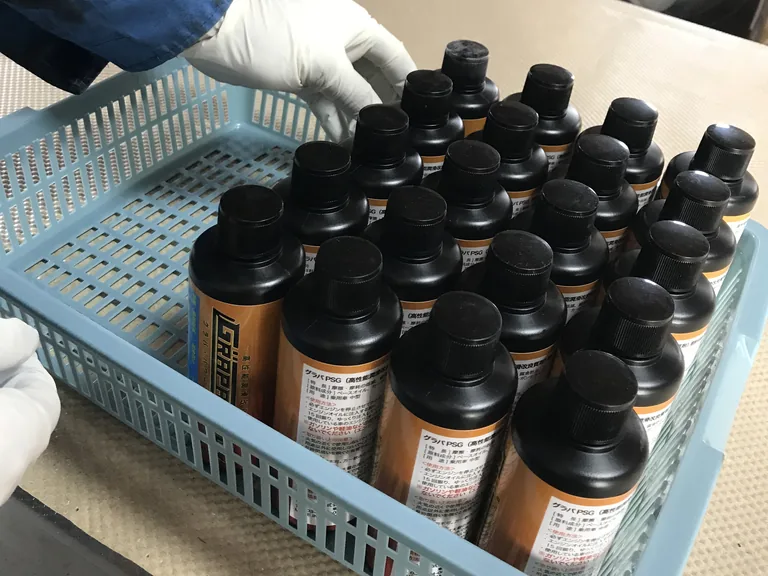
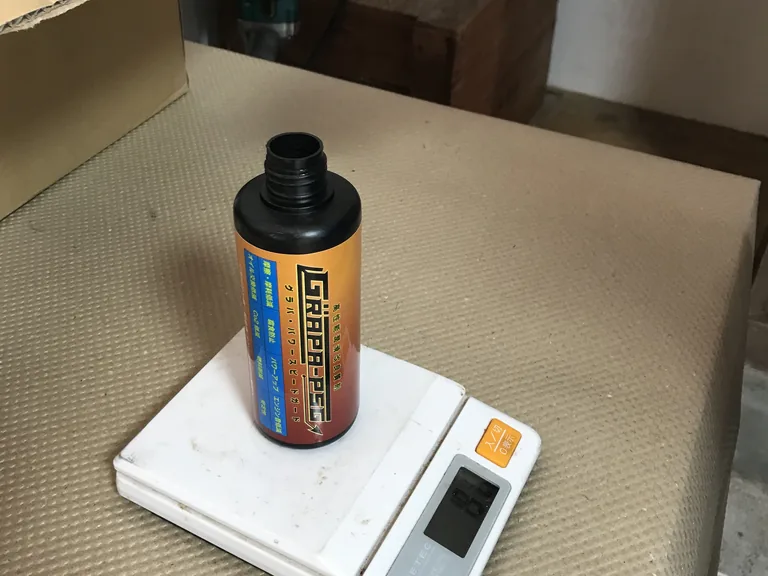
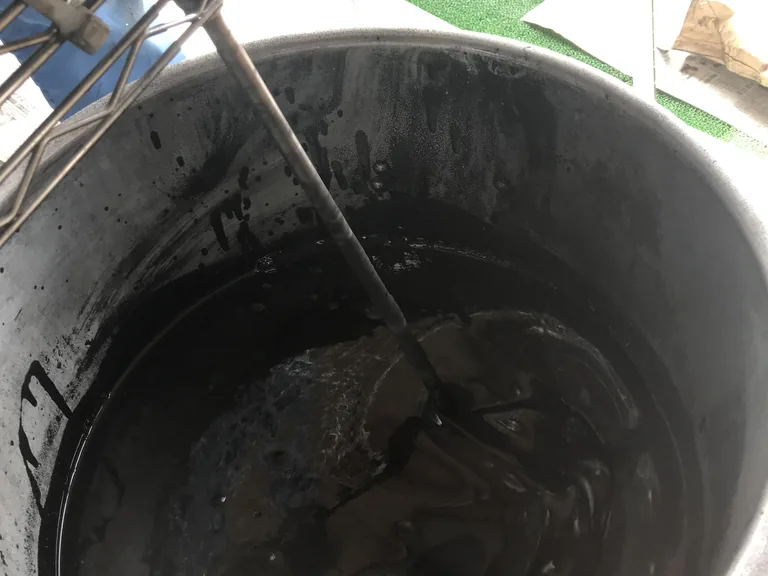
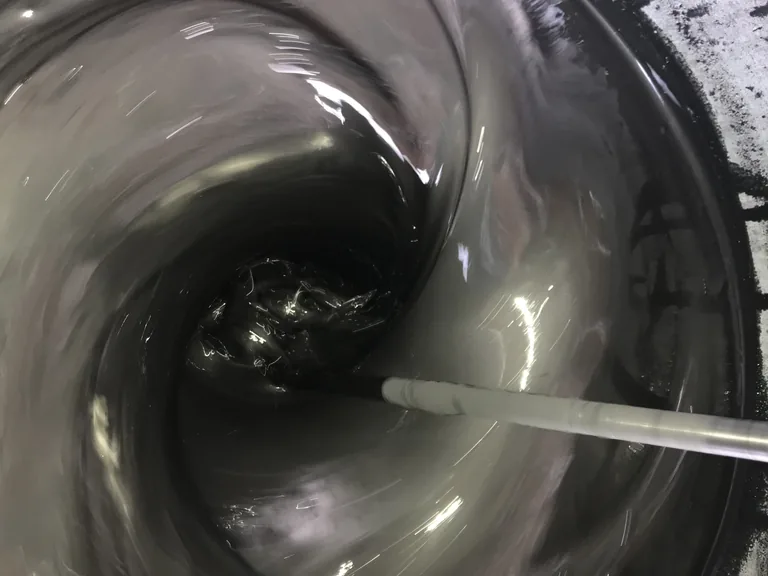
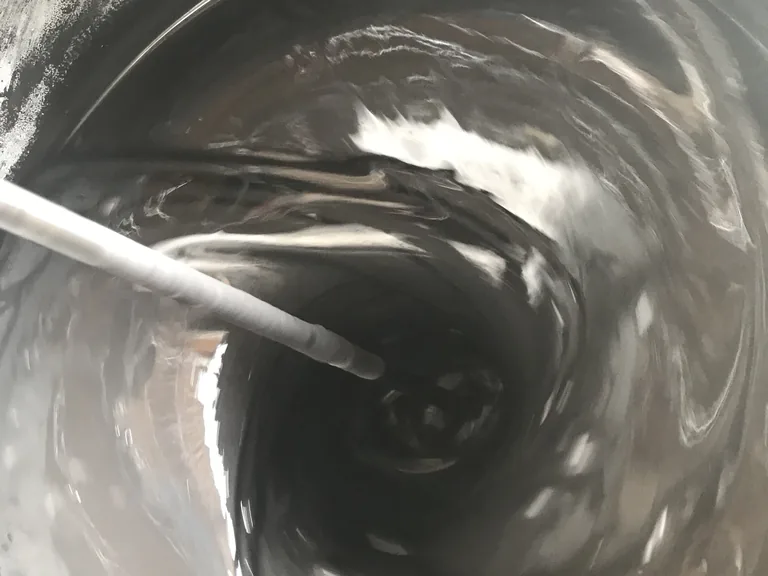
*These photos were taken during the manufacturing and prototyping stages. The labels and production processes may differ from those used in mass production.
Frequently Asked Questions
Do I really not need to touch the oil at all during the 80,000 km oil change interval?
No. It is essential to check the oil level regularly and “top off” the oil as needed. According to actual data, the amount needed to top off is very small.
Will the oil filter replacement interval also be extended?
No. You still need to replace the filter every 20,000 km, just as before. Only the full oil change interval has been extended.
Does it work with all vehicle models and engine displacements?
We provide estimated usage guidelines by vehicle type, ranging from passenger cars to 4–10-metric-ton trucks, as well as large fishing vessels and ferries. Please contact us for more details.
Can it be used with both gasoline and diesel vehicles?
Yes. Since it is a gasoline/diesel dual-fuel type, it also allows for simplified maintenance by using a single fuel type.
The amounts, reduction rates, and results listed on this site are for reference purposes only, based on sample calculations and actual results, and do not guarantee specific results. Actual results and savings will vary depending on the vehicle's condition, driving conditions, maintenance history, and other factors.
When the vehicle reaches 80,000 km, it is essential to check the oil level regularly and “top off” the oil as needed. The oil filter replacement interval remains unchanged (every 20,000 km). This oil cannot be used in wet clutches on motorcycles (it can be used in dry clutches).
To Those Interested in Grapa's PSG Business Overseas
We are considering discussions with partners who would be willing to expand the Grapa PSG business overseas, including the transfer (sale) of the overseas manufacturing rights for Grapa PSG.
- Companies interested in manufacturing and selling Grapa PSG in their own country or region
- Companies interested in becoming overseas sales agents or business partners
- For those considering making a financial contribution or investment in Grapa PSG's overseas operations
If you are interested, please contact us via the inquiry form or by email. To ensure a smooth process, please include “Grapa PSG Overseas Operations” in the subject line of your inquiry and provide your country or region, the nature of your interest (e.g., manufacturing, sales, investment), and a brief overview of your company. We will discuss the terms of the transfer on a case-by-case basis and, depending on the specifics, provide further details after signing a non-disclosure agreement (NDA).
Inquiries Regarding Overseas Operations
Start by simulating your company's potential savings for free
If you have any questions or would like to discuss something, please feel free to contact us via the contact form, email, or our official LINE account.